Engineering in Photos captures the energy, creativity, and everyday moments that define our College. Highlights from the Winter 2025–2026 collection (December 2025–January 2026) include a student-built Dobsonian telescope, the construction of autonomous hospital medication assistants, and the creation of light-up Christmas cards for local nursing home residents. Faculty and research teams explored far beyond Notre Dame’s campus, pursuing fieldwork under the Arctic polar night. Together, these images highlight a winter defined by collaboration, creativity, and the drive to explore what’s possible.
WomEEn (Women in Electrical Engineering) Make Christmas Cards


WomEEn (Women in Electrical Engineering) hosted a festive gathering open to all EE students, featuring Christmas cookies and hot cocoa. Attendees spent the afternoon creating light-up Christmas cards to share with residents of a local nursing home, spreading holiday cheer beyond campus.
TIME Lab Group Photo

Members of the TIME Lab gathered together to take a seasonal group photo. Led by Meenal Datta, the Jane Schoelch DeFlorio Collegiate Professor of Aerospace and Mechanical Engineering, the TIME Lab studies how biological, chemical, electrical, and physical abnormalities in the tumor microenvironment—including altered tissue mechanics—drive cancer progression and treatment resistance. Using engineering approaches, the lab identifies clinically translatable biophysical targets—on earth and beyond.
Shedding Light on Ice Fog in the Darkness of Polar Night


A team of Notre Dame Engineers from the Fatima-IF (Fog and Turbulence Interactions in Marine Atmosphere Ice Fog) project, led by Harindra Joseph Fernando, the Wayne and Diana Murdy Endowed Professor of Engineering and Geosciences at the University of Notre Dame, traveled to Utqiaġvik, Alaska, to study ice fog, conducting fieldwork and collecting data in extreme Arctic conditions. Their research took place during the polar night, when weeks of darkness set the backdrop for long days of instrument setup and monitoring. Even in the cold, the team added a seasonal touch, decorating their equipment for holiday photos — and had a few Arctic visitors, including foxes and a curious polar bear, pass through the area.
(Photos courtesy of Matthis Chabert D’Hières, Marilyn Dunbar, and Harindra Joseph Fernando.)
Notre Dame Students Design and Build Their Own Dobsonian Telescope


University of Notre Dame students Peter Verges, a junior majoring in aerospace engineering, and João Pedro Ferreira Gil, a sophomore majoring in applied and computational mathematics and statistics, designed and built their own 10-inch Dobsonian telescope. From detailed campus-inspired cutouts to testing it under the night sky, the project brought their classroom learning into hands-on focus.
Mechanical Engineering Senior Design Demo


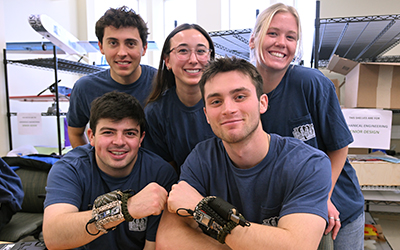
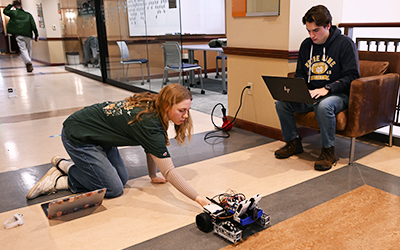


Mechanical Engineering Senior Design students were tasked with developing an autonomous hospital medication assistant that would interact with two different wearable devices: one device that transmitted a signal based on some biomechanical movement when one patient was in pain, and a second device that passively monitored another patient’s temperature and sent a signal when reaching a fever threshold.
CSE Undergraduate-Developed Chip Launched Aboard HUNITY Satellite

A chip developed by the undergraduate team of Matthew Morrison, associate teaching professor in the Department of Computer Science and Engineering, was launched into orbit aboard a HUNITY PocketQUBE MRC-100 satellite on a recent SpaceX Falcon 9 mission. Still circling Earth every 90 minutes, the HUNITY satellite is up there right now — and you can track its location as it makes each pass around the globe.
COSE Research Horizons Symposium Poster Session


Faculty, postdocs, and graduate students gathered for the Colleges of Science and Engineering’s COSE Research Horizons Symposium, presenting their work during the COSE Poster Session. Throughout the day, presenters answered questions and exchanged ideas across disciplines. The event showcased the depth and impact of research across the Colleges and reflected the strength of scholarship on display.
Professional Headshots

Students from the Mechanical Engineering Careers Course, along with members of the Notre Dame Engineering staff and faculty, stopped by our office for professional headshots. Our photographer was set up and ready in our studio office, creating a welcoming space for participants to step in front of the camera. This behind-the-scenes look captured the setup that helped bring everyone into focus.
Notre Dame Spring Career Fair
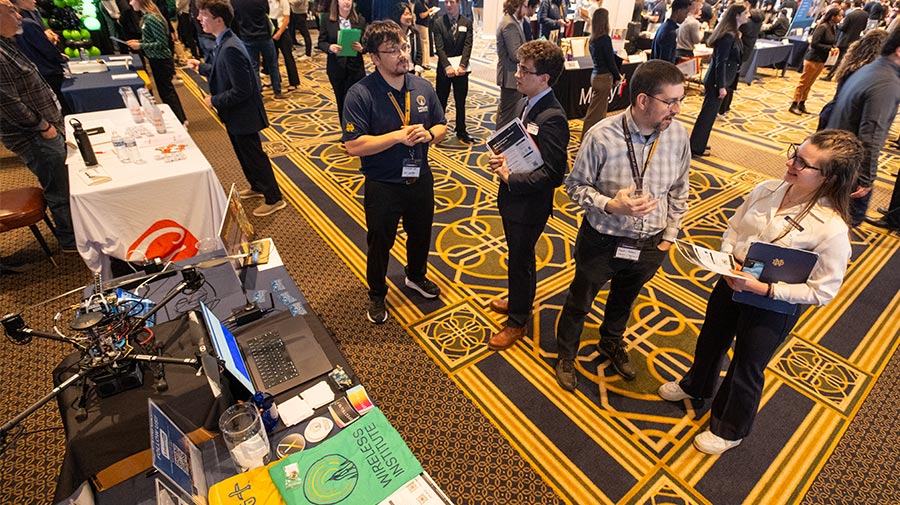
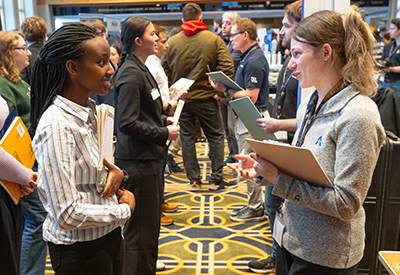
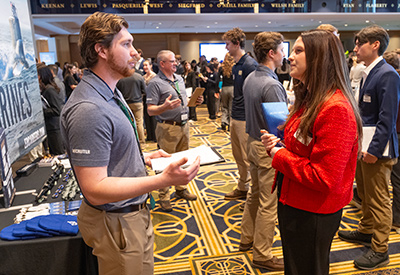
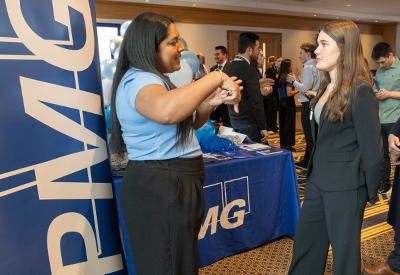
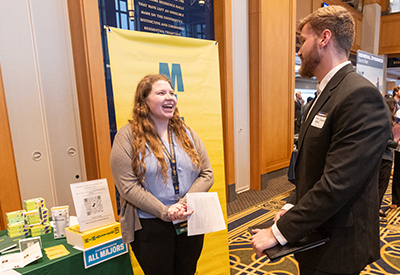
The Notre Dame Spring Career Fair provided engineering students the opportunity to engage with employers across industries and explore career pathways. Throughout the event, students connected with recruiters, learned about opportunities, and gained insight into a wide range of professional fields.
This photo collection was produced by the Notre Dame Engineering Communications and Marketing team. Photos by Wes Evard, Notre Dame Engineering unless otherwise credited.